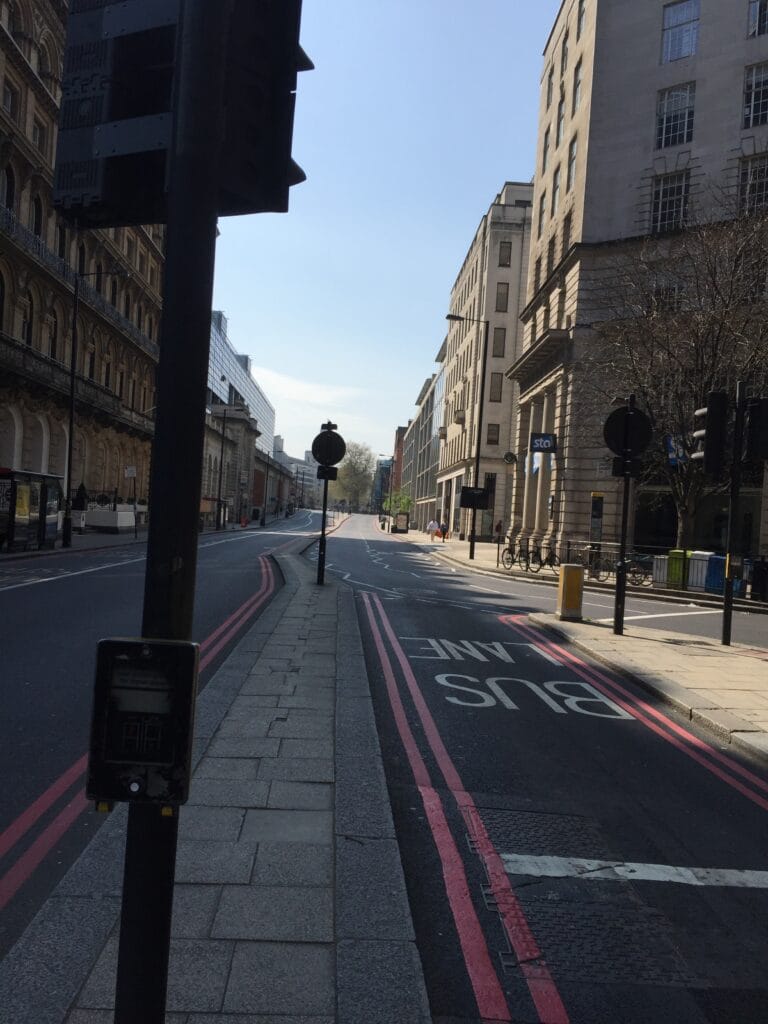
Six years on from the COVID-19 Pandemic lockdowns, I sometimes think back to that strange period in London when the world felt as if it had stopped. At the time, I was working in a small bakery near Victoria. Normally that area is one of the busiest parts of the city commuters rushing through the station, tourists heading toward Buckingham Palace, buses moving constantly, the usual London rhythm. But during lockdown, everything changed.
The streets were empty. No crowds. No traffic noise. Just a strange silence. Walking through those quiet streets felt eerie, almost unreal. A city like London usually so alive and restless suddenly looked frozen in time. It was fascinating and unsettling at the same time, like witnessing history unfold in slow motion. That period was a real upheaval. The pandemic forced to reconsider so many things: work, health, connection, and what truly matters. It disrupted routines, created uncertainty, and challenged many of us in ways we had never experienced before.
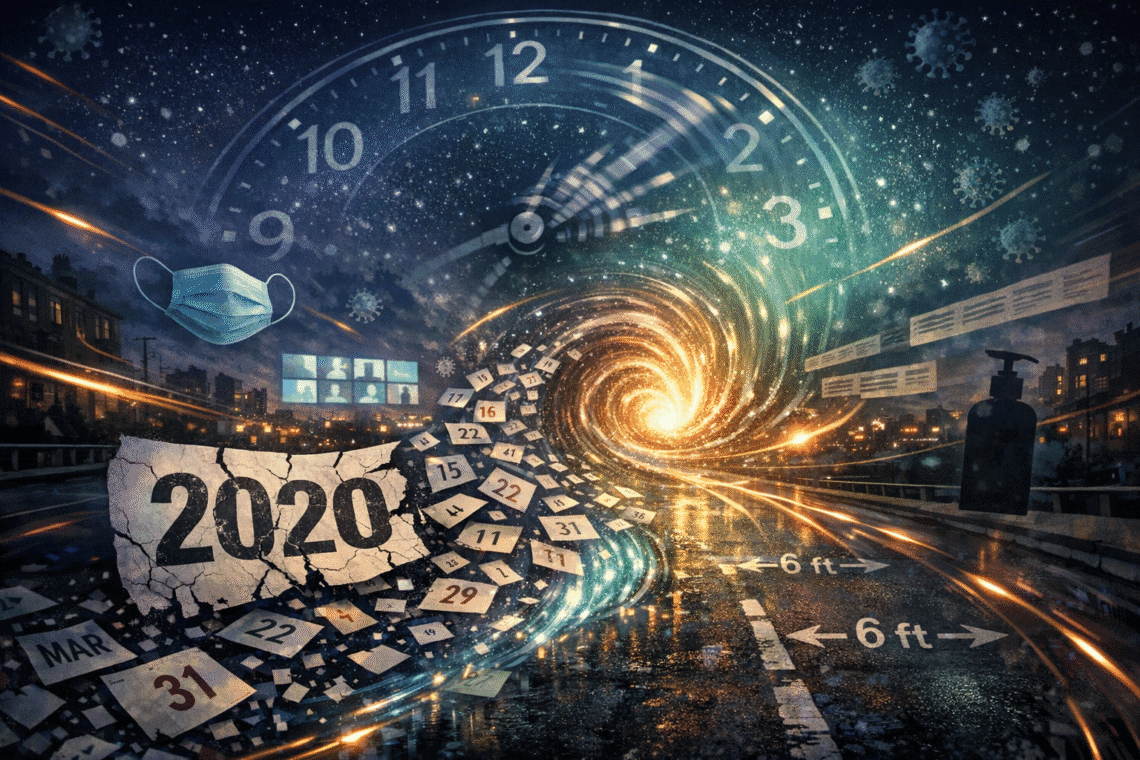
Looking back six years later, it still feels surreal. Yet it was also a moment that reshaped our lives and perspectives. It became a reminder of how adaptable human beings are when everything changes overnight. Since the COVID-19 Pandemic, many of us feel as if time has been moving faster. Some people call it the “2020 effect.” The disruption of routines, months of lockdowns, and the blur of similar days seemed to compress our sense of time. When normal life gradually returned, the years that followed felt like they rushed by. Looking back now, 2020 doesn’t feel six years away.
Memory Factor
Many people experienced a new monotony while working from home and living with a reduced social life. Days often looked the same: the same room, the same routine, fewer spontaneous interactions and fewer reasons to go out. Without these “temporal markers” commuting, meeting friends, events, or even simple changes in daily rhythm time began to blur. When our experiences become repetitive, the brain records fewer distinct memories. Over time, this monotony meant the brain had fewer memorable events to register, almost as if it “skipped” large, unremarkable chunks of time.
I couldn’t work from home. I still had to commute across London on nearly empty buses. Each day followed the same pattern the same quiet journey, the same routine at work, and a very reduced social life. The repetition created a kind of monotony where the days felt almost identical.
To break the monotony and counter feelings of lassitude, I intentionally diversify my activities. I combine triathlon training with gym workouts to vary my physical exercise, keeping both my body and mind engaged. I also explore different types of meditation, which helps me stay present and reset my focus. At work, I make a point of intentionally switching between. To avoid doing the same thing everyday.
An Overstimulated World
Many people experienced a shift toward remote work, increased screen time, and endless “doom-scrolling.” With our attention constantly pulled by notifications, news, and multitasking, our brains remain continuously occupied and often overstimulated. When so much mental effort is spent processing information and switching between tasks, we pay less attention to the passage of time itself. As a result, days can feel full and exhausting, yet when we look back, weeks and months seem to have passed surprisingly quickly.
The constant and rapid flow of information news updates, notifications, and social media also contributes to the feeling that the world is moving faster. Since the COVID-19 Pandemic, many people have been exposed to an almost continuous stream of content.

To counter the overstimulation of constant information and digital distractions I deliberately changed my daily routine. I avoid social media, news, and unnecessary digital distractions in the morning and evening. Starting and ending the day without that constant stream of information helps reduce stress and allows my mind to stay calmer and more focused. Instead of scrolling, I replaced that habit with reading. It gives my attention a single direction rather than fragmenting it across multiple notifications and updates. This simple shift helps me slow down mentally, regain focus, and create a more intentional rhythm to my day.
Online Social Interactions
The shift toward virtual interactions has also played a role in how we perceive time. Since the Pandemic, many conversations, meetings, and social moments have moved online. While convenient, these digital interactions often replace physical experiences traveling somewhere, meeting people in person, or sharing environments that tend to create stronger and more distinct memories. With fewer of these tangible, memorable experiences, our mental timeline becomes less detailed.
I deeply enjoy in-person social connections because they satisfy one of my strongest natural instincts: curiosity. I have always been fascinated by people their stories, their perspectives, the paths that brought them to where they are today. Every conversation feels like opening a small window into a different world. Meeting people face-to-face creates a depth that is difficult to replicate online. In person, you can feel the energy of the conversation: the tone of voice, the pauses, the laughter, the subtle expressions that reveal meaning beyond words. These small human details make interactions richer and more memorable.
For me, social encounters are not just about talking; they are about learning. Each person carries a unique set of experiences, beliefs, and insights. That is why I value in-person events so much. They create the conditions for genuine connection spaces where ideas flow freely and where people can truly see and hear one another. In a world that is increasingly mediated by screens, these moments of real human presence feel both rare and deeply meaningful.
Lack of Novelty
One of the most fascinating aspects of human perception is how our brain measures the passage of time. Rather than tracking time like a clock, the brain evaluates it based on the number of new and distinct memories we create. Novelty acts as a kind of mental bookmark. The more new experiences we have, the more markers our mind places along the timeline of our lives. When life is rich with variety traveling to new places, meeting different people, attending events, discovering unfamiliar environments our brain records many unique memories. Looking back, these numerous “bookmarks” stretch our perception of time, making a year feel long and full.
During the pandemic, however, this process changed dramatically. Lockdowns, reduced travel, limited social interactions, and the repetition of daily routines significantly decreased the amount of novelty in our lives. Without new experiences to mark the passage of time, the brain had fewer memories to anchor itself to. This insight highlights something important about how we experience life. To slow down our perception of time, we do not need more hours in the day; we need more novelty within those hours. New experiences, small adventures, new environments, and new connections expand our memory landscape and, in doing so, stretch our sense of time.
How To Slow Down Time?
To counter the monotony that compresses our perception of time, I intentionally introduce novelty into my daily life. One simple way I do this is by breaking routine: taking different routes to work, walking through unfamiliar streets, or visiting new places. Even small changes force the brain to pay attention and create new memories, adding fresh “bookmarks” to the timeline of the day.
Living in London makes this particularly easy. As one of the largest and most cosmopolitan cities in the world, it offers an endless variety of cultures, neighbourhoods, and experiences. There is always something new to explore a different street, a hidden café, a market, or a cultural event happening somewhere in the city. Food is another way I bring novelty into my life. I love trying cuisines from around the world, especially Asian food. Every dish carries a story, a culture, and a tradition behind it. Discovering new flavours becomes another way of exploring the world without leaving the city.
Another way I expand my perception of time is by cultivating mindfulness and presence. When our attention is scattered constantly switching between notifications, news, and social media moments tend to blur together. The brain registers fewer meaningful details, and time seems to pass almost unnoticed. To counter this, I intentionally reduce screen time and focus on activities that require deeper attention: writing, reading, and meditation.
My First Experience in a Buddhist Centre
Recently, I went to a Buddhist community centre in Brixton for the first time to experience meditation in a group setting. Practicing meditation with others created a very different atmosphere from meditating alone. The session focused on awareness, presence, and grounding simply observing the breath and returning attention to the present moment. Meditating in a group brings a sense of shared intention. Everyone in the room is there for the same purpose: to slow down, become present, and cultivate awareness. This collective focus creates a calm and supportive environment that can make it easier to settle the mind.
There is also something deeply human about sharing silence. Even without speaking, you feel connected to the people around you. The practice becomes not only an inward journey but also a subtle form of community. It reminds us that the search for presence, clarity, and peace is something many people share. The experience left a strong impression on me, and I plan to return regularly. In a world that constantly pulls our attention away, these moments of stillness, awareness, and human connection help slow down time and make life feel more intentional.
Final Words
The pandemic disrupted our normal rhythms, and when lockdowns lifted, life accelerated quickly. There was a collective pressure to catch up on everything that had been paused work, travel, social life, and postponed plans. This sudden return to activity created a hectic pace where weeks and months seemed to pass almost instantly.
At the same time, psychology offers another explanation. As we grow older, our brains naturally process experiences less distinctly. Memories begin to overlap, and familiar patterns repeat themselves more often. Because fewer moments feel truly new, the brain compresses them together, making time appear to speed up. Routine also plays a powerful role. Since 2020, many people have adopted or returned to highly repetitive daily patterns. When the brain runs on autopilot, it records fewer details. Without strong or novel memories to mark the passage of time, days blend together and entire months seem to disappear.
This is why I try to intentionally introduce diversity into my routine. Through triathlon training, I combine different forms of exercise swimming, cycling, running, and gym sessions. Each discipline engages the body and mind in a different way. Alongside this, I explore different forms of meditation, which bring attention back to the present moment. These variations break the monotony of routine and create richer experiences. In doing so, they help anchor time with more distinct memories. Ultimately, slowing down the feeling of time passing is less about controlling the clock and more about enriching our experiences staying curious, present, and open to the variety that life offers.