Human curiosity is one of the most defining forces of our existence. It is the quiet spark that pushes us to ask questions, to explore the unknown, and to seek meaning beyond what is immediately visible. From the moment we are born, we reach out touching, observing, wondering. Why is the sky blue? This innate drive has shaped the course of humanity. It has led us across oceans, into the depths of the mind, and beyond the boundaries of our planet. Curiosity is not just about finding answers it is about the courage to ask, to doubt, and to imagine something greater than what we already know.
At its core, curiosity is a bridge between the present and the possible. It invites us to step into uncertainty, to embrace discovery, and to continuously evolve. Without it, there would be no growth, no innovation, no transformation only stillness. But with it, there is movement, expansion, and the endless unfolding of human potential.
The most curious people in the world often become the most successful not because they have all the answers, but because they never stop asking questions like children do. Curiosity pushes them to explore beyond the obvious, challenge assumptions, and continuously learn and adapt. It keeps their minds open, their perspectives evolving, and their growth constant. In a world that is always changing, it’s this willingness to stay curious longer especially in times of uncertainty.
Why Are We Curious as Humans?
The answer is in our evolutionary past and biology. Since our early ancestors, curiosity was a matter of survival. Those who paid attention to unfamiliar sounds in the bushes or dared to investigate new plants were often the ones who discovered fresh food sources or detected predators before it was too late. So this instinct to explore the unknown created a powerful survival advantage. Our most curious ancestors were better at finding food, detecting predators. As well as at creating tools, leading to better survival rate. This created chances of staying alive in unpredictable environments in the savanna.
Neuroscience suggests that curiosity actively engages the brain’s dopaminergic reward system. Making learning to feel genuinely pleasurable. When we encounter something new or intriguing, our brain releases dopamine and reinforces our drive to explore and understand. Researches show that dopamine responds more to anticipation than to the reward itself the excitement of discovery drives us more than the discovery. This mechanism keeps us searching, questioning, and engaged, turning curiosity into a self-sustaining cycle of exploration and growth. The mental discomfort of recognizing a gap in our knowledge ignites curiosity. So it drives us to seek information to restore balance.
How Do We Use That Human Trait?
Today, our curiosity is no longer essential for survival. Yet the curiosity itself has not changed. It’s always a constant part of human nature. In the modern world that same curiosity plays a powerful role in education, pushing us to learn, to grow, and to make sense of complex ideas. It also shapes what makes us happy, guiding us toward interests, passions, and moments of discovery that give life meaning.
However, the environment around us has changed dramatically. Today, curiosity is often met with instant answers. We can fill the gap immediately with a quick search, a video, or a scroll through social media. While this satisfies the urge in the moment, it can weaken the deeper process of learning. The satisfaction becomes brief and shallow rather than lasting. Many people fall into patterns of instant gratification. Where curiosity is constantly triggered but rarely fulfilled in a meaningful way. Social media and endless content create distractions that pull attention in many directions at once.
It becomes easy to go down rabbit holes that feel engaging but lead to irrelevant or unproductive outcomes. In this way, we do not lose curiosity, we redirect it. Instead of driving deep understanding, systems capture it to keep us engaged rather than informed. Today, we must resist being pulled in by constant streams of stimulating information and use our curiosity more intentionally. In order let it guide us toward knowledge, growth, and genuine satisfaction, rather than fleeting distraction.
My Curiosity lately
Lately, I’ve found myself drawn more and more toward Buddhism, not as an abstract philosophy, but as something lived. Going regularly to meditation centres has become more than a routine. It feels like a return. A return to something simple, something grounded, something true and enjoying being part of a community. I’ve noticed a real shift in my meditation practice. It feels deeper, more natural less like something I’m trying to do, and more like a space I’m allowing myself to enter. I feel more connected and curious to different parts of myself, especially the quieter ones that often get overlooked in the noise of everyday life. There’s a growing sense of being grounded, anchored in the present moment rather than constantly pulled into the past or projected into the future.
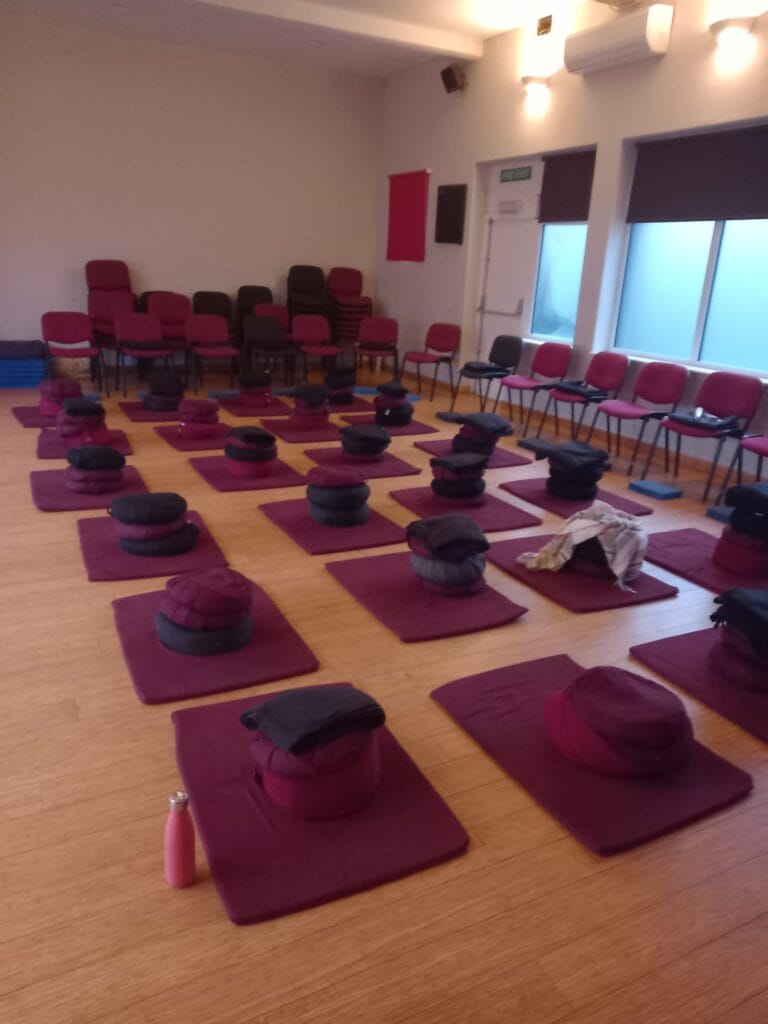
This deeper connection with myself has naturally led me to ask a simple but powerful question: what am I truly curious about? Not what I think I should be interested in, but what genuinely draws me in without effort. I’ve noticed it while walking through London. Without overthinking, I find myself naturally gravitating toward Asian shops stepping inside, observing, exploring. There’s something about them that feels different from my European background, something unfamiliar yet deeply intriguing. It’s not just about the objects or the food; it’s about the culture, the traditions, the stories behind them.

I’ve always felt this pull toward discovering how other people live, think, and experience the world. This curiosity feels very aligned with everything I’ve been cultivating through meditation. Instead of judging or staying within what’s familiar, I feel more open more willing to explore, to learn, to understand. It’s like curiosity becomes a bridge, connecting me to something beyond myself. And interestingly, this isn’t just a personal feeling. Scientific studies also suggest that curiosity plays a key role in building deeper, more resilient relationships. It acts as a catalyst for intimacy and genuine human connection. When we approach others with curiosity asking questions, seeking to understand rather than to judge we naturally develop more empathy. It softens our reactions, reduces aggression and I believe it can make a better world.
Final Words
As a final reflection, following the Artemis II mission around the Moon brought everything full circle for me. Watching it unfold, listening to the astronauts describe live what they were seeing, brought me excitement. They were witnessing things no other human beings had ever seen in that exact way, at that exact moment. It made me reflect on curiosity itself. Not just as a concept, but as something that defines us. This desire to explore, to understand, to go beyond what is known it’s part of who we are. Whether it’s sitting in meditation, walking through unfamiliar streets in London, or looking up at the Moon. We all have the same underlying impulse: to discover.
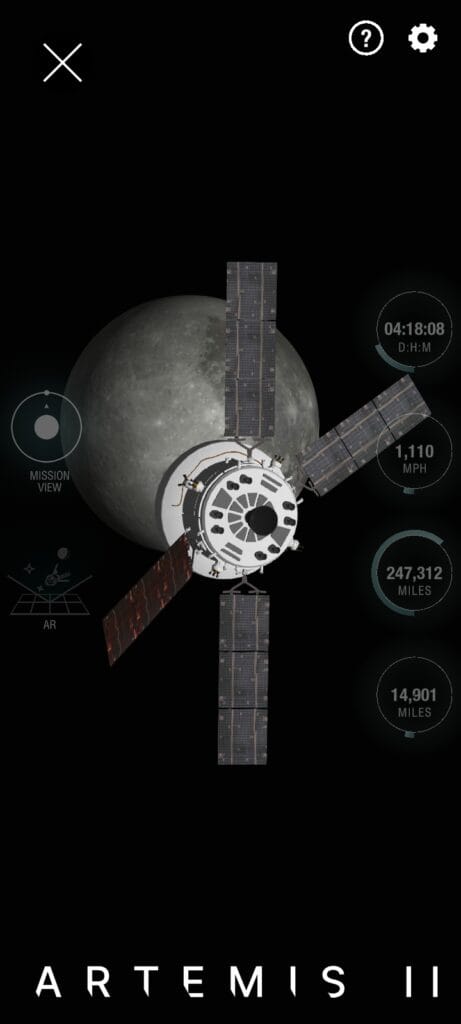
I’ve always been drawn to astronomy and space exploration, and this experience reminded me why. It’s not just about space it’s about possibility. It’s about pushing boundaries, asking questions, and embracing the unknown. The same curiosity that leads us inward, toward self-awareness, also propels us outward into the cosmos. And what feels clear to me now is that exploration will never truly end. On Earth and in the universe. There will always be something more to see, to understand, to experience. That’s the beauty of the Human being.
Exploration is what allows us to move forward even when nothing is certain, when the path is unclear and the outcome unknown. It replaces doubt with questions, and hesitation with small steps into the unfamiliar. In that sense, success is not just about reaching a destination, but about having the courage to stay open, to keep learning, and to trust that something meaningful can emerge even in the complete unknown.
And you? Where can you start to be more curious?