Pride Month is a time of celebration, reflection, and gratitude, and for me, it marks an important chapter in my journey toward self-acceptance. For many years, I carried my identity quietly, learning to understand and embrace who I am as a gay man. Last year, I took the significant step of coming out, allowing myself to live more authentically and openly than ever before. But I always secretly knew I will have to face it at a time of my life.
Since then, speaking honestly about my experiences and sharing this part of myself with others has brought a sense of freedom, confidence, and connection. This Pride Month, I celebrate not only how far I’ve come, but also the power of living openly and proudly as my true self. This article is nothing more than talking openly and with honesty.
My Teenage Years and the Secret of Who I Was
One day during my early adolescence, I started kissing and having a romance with a good friend who lived on the same street where I grew up. But I quickly pulled away out of shame and fear. Homosexuality was still deeply taboo at the time, especially in my region. But I had always known my attraction to boys around my own age. My stepdad of that time had created a home filled with constant fear and psychological violence. Where I lived in terror of failing at school and disappointing everyone.
I ultimately did fail, and he made me feel guilty for things I had never even thought. Including the false assumption that my brother and I hated our mum. Out of fear of not being good enough, of mockery or rejection from my own family, or worse, ending up on the street, I repressed my homosexuality. I stayed scared to ever be fully myself for years from that period. But it was also something I couldn’t clearly identity. A period of our life where we’re supposed to built our identity.
For me, it was supposed to be a period of self discovery and self-acceptance. But instead it became a time of hiding and survival. The fear instilled by my stepdad, the constant pressure from him to succeed at school. Also the deep shame around my attraction to boys made it impossible to build any real sense of self. Living in a state of psychological violence that left no space for the natural process of figuring out my identity.
How the Unconscious Mind Uses Control to Seek Safety
I grew up unable to accept my sexuality, and because I had always been deeply fascinated by spirituality. That I sought refuge in a tradition dominated by men. However, by choosing this path, I unknowingly placed myself in an environment that was overwhelmingly homophobic. I was drawn to the perceived order and sacredness of these spaces. Yet they mirrored the rigidity I had faced at home. In my search for spiritual belonging, I ended up in a landscape that demanded I continue to hide the most authentic parts of myself.
Because I did not accept my sexuality and was deeply afraid of it. So I developed a strong need for control and learned to wear a mask. I convinced myself that if I prayed enough, followed the right spiritual path, or simply waited long enough, these feelings would eventually disappear. That I would have a wife and kids in a big house.
Maintaining this belief gave me a sense of safety and certainty. Allowing me to avoid confronting a part of myself that felt dangerous in the environment I lived in. I spent years hoping that faith, discipline, or time would change me. That these feelings would go away, hiding behind an identity that felt more acceptable to others than to myself. I couldn’t exactly know where the feelings came from or why they took root in me. Investigating my own identity felt like opening a door to a room I wasn’t ready to enter, and the discomfort was sharp enough to make me turn away every time. It’s a strange place to be, knowing a fundamental truth about yourself while finding the path to fully understanding it too difficult to try to figure out.
The Echo of an Unvoiced Spring
Since childhood, fear was often the drive behind many of my decisions. It taught me to choose safety over uncertainty, silence over vulnerability. Again and again, I followed familiar patterns: avoiding risks, hiding parts of myself. Unauthenticity was a protection for me. My cousin came out years before I did, and his experience became something I watched from a distance. It was not easy for him with family. He even got assaulted because of who he was. Over the years, he became involved in LGBT activism.
Back in spring 2013, I was in high school, carrying a truth that I had never admitted to myself. Instead, I lived in a state of confusion, trying not to look too closely at feelings that seemed too difficult, too frightening, to understand. I felt lost, caught between who I was and who I believed others expected me to be. That year, France legalized same-sex marriage. Suddenly, questions about homosexuality were no longer distant or invisible. They were everywhere: on television, in newspapers, at school, and around family tables. The country seemed locked in a fierce debate. The legalization process deeply divided public opinion and sparked some of the largest protests France had seen in years. For someone already struggling with his identity, it felt impossible to escape.
On one hand, I was witnessing something historic. More people seemed willing to live openly. For the first time, I could see examples of lives that looked like they might one day resemble my own. Yet at the same time, I also saw a harsher side. The public debate seemed to unleash prejudice that had long remained hidden. Homophobia became more common, and opposition to LGBT rights was impossible to ignore. Looking back, I can see that 2013 offered me a glimpse of a future I was not ready to embrace. As society slowly opened its doors, I remained standing outside, unable to step through. Still held back by fear I missed an opportunity to acknowledge myself. To imagine that I too could belong in this changing world.
We All Have a Robben Island
My very good friend Pat once gave me a gift, which is The 5AM Club by Robin Sharma, a book centred on the power of daily routine, discipline, and intentional living. Things he knows I value and hold on to. I connected with its message about creating structure, protecting the first hours of the day, and building a life through small repeated acts. But it was near the end of the book that something deeper reached me. The characters visit Robben Island. This is where Nelson Mandela was imprisoned for twenty-seven years, enduring humiliation, struggle, isolation, and fear.

In that moment, one quote stayed with me and became the first quiet nudge toward myself: “We all have a Robben Island, a place within us where we are imprisoned by our fears, limitations, wounds, and the stories we’ve accepted about ourselves.” It made me wonder what my own prison was, what fears had shaped me, and what stories I had mistaken for truth. This quote inspired me deeply because it reminded me that the greatest barriers are often the ones we carry within ourselves.
For a long time, my own “Robben Island” was the fear of coming out and being seen for who I truly am. Looking for external validation. But also not knowing fully knowing what impact I can have in the world. Reflecting on this journey helped me realize that many of the limitations I faced were connected to stories I had accepted about myself rather than the reality of who I am. Reflected about my childhood and that I’ve always been thoughtful and curious. That reflection strengthened my coaching mindset, which is an important part of who I am. Something has always been there. Coaching is rooted in growth, self-awareness, and the belief that people can move beyond their fears and limiting beliefs.
The Tears That Cleared The View
I spent nights lying awake in the darkness, tears streaming down my face as I wrestled with a truth I had spent years trying to avoid. As I want to help others grow, to inspire people to thrive, and to create meaningful impact through coaching, yet I was hiding a fundamental part of who I was. Deep down, I knew that if I want to facilitate transformation in others, I had to be authentic and honest. Remembered the times my family asked me whether I preferred men to women. I carried beliefs, fears, and expectations . Acknowledging my sexuality felt painfully uncomfortable. oaching taught me that growth begins where honesty starts. Through self-reflection, I learned more about myself than ever before.
It was messy, emotional, and at times Heart-breaking. But in those moments of discomfort, I discovered that authenticity is not just something we encourage in others it is something we must choose for ourselves. The tears I cried in the middle of the night were not signs were the beginning of my freedom. From my coach training and the practice made me courageous to face my fears.
One of the heaviest weights I still carry is the memory of my father in his final days. When he looked at me and asked if I preferred men to women. Fear gripped me tighter than the truth, and said “no”. Whenever my family asked me this question my answer was the same.
My Winter Olympics Inspiration
Since coming out, I have felt more present than ever. More present in conversations and in relationships. More present in my coaching practice. I found myself more focused, more engaged and more productive. Authenticity has a way of simplifying life. When you stop carrying the weight of pretending, you gain the freedom to direct that energy toward growth, service, and purpose. Maintaining a concealed identity requires considerable cognitive and emotional resources. When individuals no longer need to manage closeted information, these resources can be reallocated to task performance, decision-making, creativity, and goal attainment.
Coming out is more than a disclosure of identity it is a process of self-discovery that enhances self-awareness, supports self-actualization, and contributes to greater satisfaction. As well as increased performance. At the 2026 Winter Olympics in Milan-Cortina, curler Bruce Mouat from Team GB stands out for me as a profound inspiration. Proving that authenticity is the ultimate catalyst for elite performance. After coming out at 19, a journey sparked by the realization that he didn’t share the same romantic interests as his team mates. He transformed his struggle with mental health and on-ice form into world-class excellence.
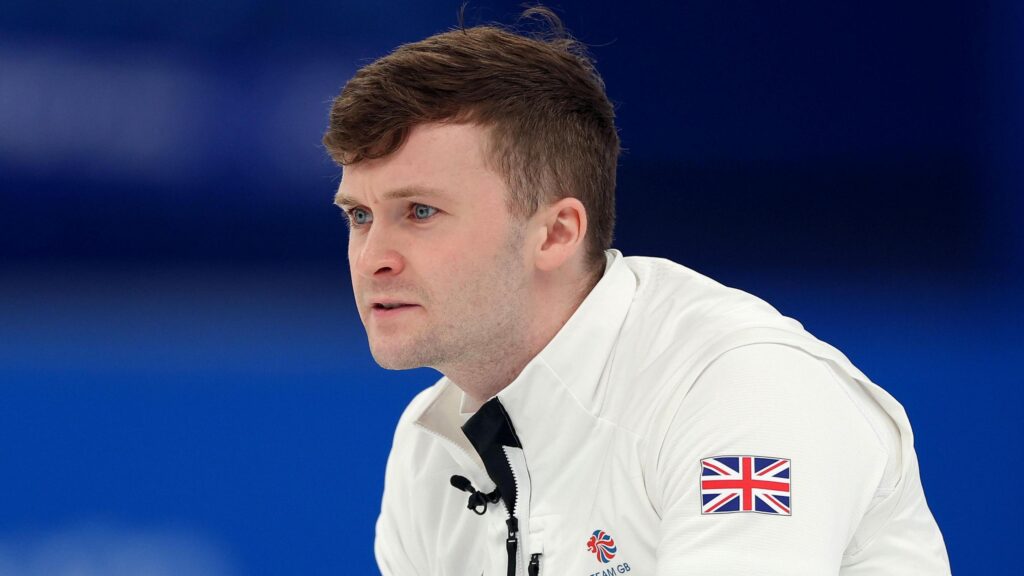
By confiding in a sports psychologist and receiving the unwavering support of his teammates. Bruce shed the exhausting burden of concealment and redirected that mental bandwidth toward his game. He frequently reflects that he might not be competing at this elite level today if he hadn’t embraced his identity. His story is a powerful testament of visibility and finding the strength on how embracing your authentic self can elevate an athlete from surviving to thriving.
Diving Out Like Tom Daley
Another inspiration of mine is the diver Tom Daley. Before London had won the bid to host the 2012 Olympics, he imagined himself competing there in front of a home crowd. He had a vivid image of him performing and winning while visiting the area in East London that would later become the Olympic Park. He surrounded himself with reminders of that dream, including knitting the Olympic rings as a child. The broader idea aligns with what many elite athletes practise: mental rehearsal. Sports psychology has good evidence that visualisation can improve confidence, focus, and performance.
He endured bullying at school and later spoke openly about the struggles he faced in coming to terms with his sexuality. I relate to that part of his story, which makes his achievements feel even more meaningful to me. His journey reminds me that having a clear vision, believing in yourself through adversity can help turn even the biggest dreams into reality. He’s become one of the biggest and most successful athlete of the UK.

Tom Daley’s approach resonates with me because he combines visualisation with a consistent daily routine to support both his performance and his mental wellbeing. He uses practices such as daily meditation, yoga, and even knitting by the pool to stay calm, focused, and manage performance anxiety between dives. I can relate to this because I also have a daily routine that includes meditation. Which helps me stay grounded and focused on my own goals. Daley has also spoken about how coming out and being able to live authentically. It had a positive impact on his life after doing so. He described feeling happier, with improved mental wellbeing, and this allowed him to train and perform more effectively. As well as more productive.
Becoming Who You’ve Always Been
My meditation routine is the homecoming that allows me to rediscover who I am and always been. By sitting in stillness, I peel back the layers of expectations, the scars of bullying, and the fear of judgment that once forced me to hide. It is through this daily practice that I find the version of myself that remained unchanged and authentic core that was there before the world told me who to be. There is a profound sense of relief in letting go of the weight I’ve been carrying. And I now feel more open to talking about the fact that I am gay. It brings me a sense of peace and confidence.
Operating from a place of deep authenticity creates a powerful alignment that serves as a primary catalyst for the manifestation of our dreams. I feel my internal energy becomes a focused, unwavering force that naturally drives my productivity toward meaningful goals. This state of courageous self-expression allows me to approach every task with clarity and purpose. Transforming my vision into reality through inspired action and a steadfast belief in my own potential. Coming out has been the best thing I’ve done in recent years.
Choosing to live authentically with pride has profoundly improved the relationships I have with the people around me. Regardless of who they are, by removing the barrier of secrecy. I’ve invited a new level of genuine connection and transparency into my interactions. Allowing for deeper trust and mutual respect. This openness has not only strengthened my existing bonds, but has also empowered me to engage with everyone from a place of confidence and honesty. Creating a more harmonious and supportive space in every area of life.
The Power of Your Truth
While the journey toward coming out is deeply personal, it should always happen on your own timeline. There is an incredible world of peace waiting for you on the other side. When you stop hiding, you stop filtering your joy and your potential. If you feel ready, know that living openly can be the ultimate catalyst for your personal growth, deeper relationships, and the fearless pursuit of your dreams.
We do not have to shrink our passions, change our tastes, or hide our habits to make others comfortable. We do not need to convince anyone or seek approval for our opinions, dreams, or the life we want. And We don’t to fit into every space or meet every expectation. It’s about loving ourselves, celebrate whoever we are, and stand proudly in our truth.
What small step can you take today toward living more authentically? What would it feel like to be fully seen and accepted as you are?
You deserve to be known and loved for exactly who you are.